


Author:
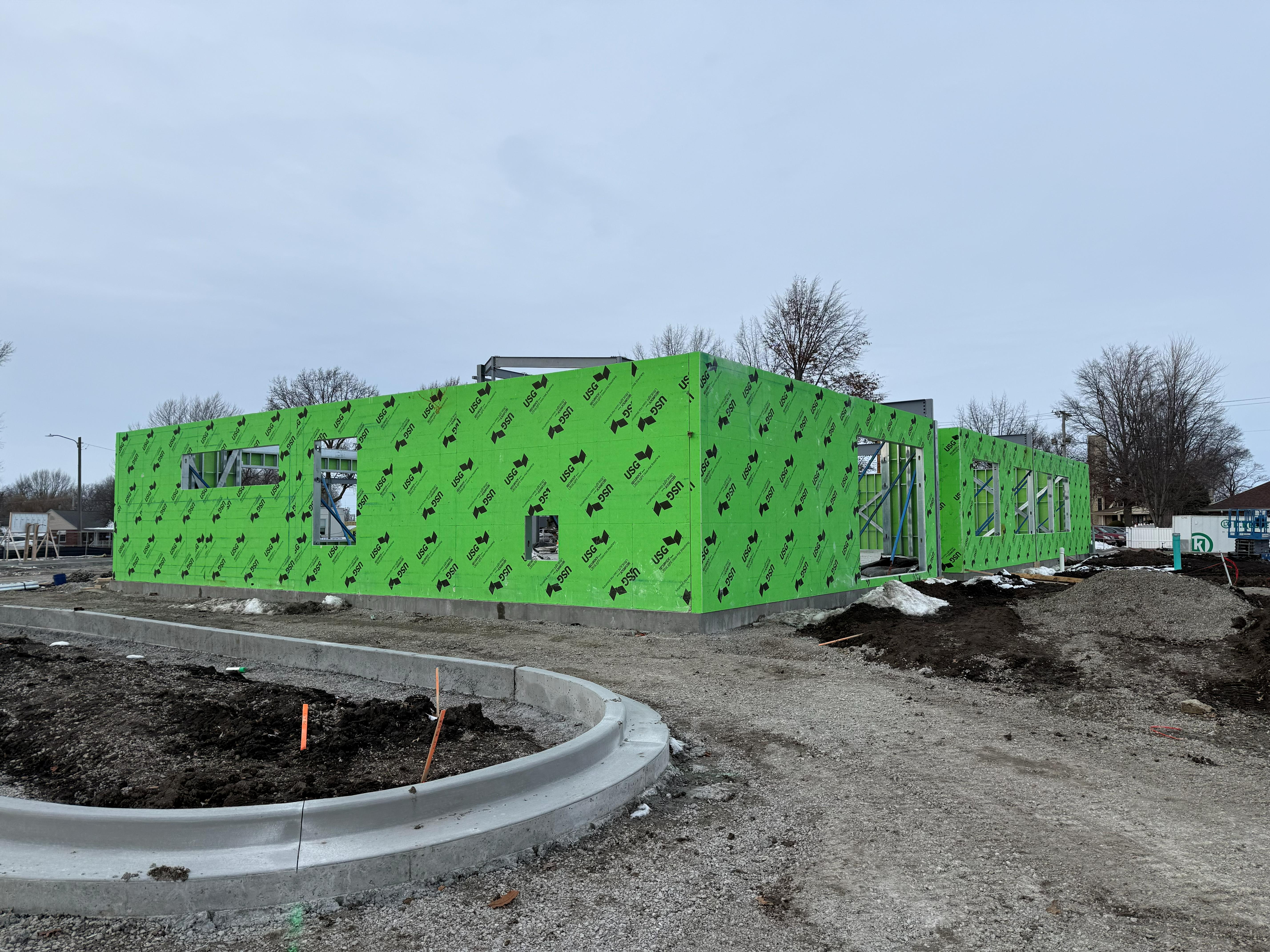
Project Name: Taylorville Community Credit Union
Project Manager: Garrett Hagen
Location: Taylorville, IL
Building Type: Bank
Size: 99’ x 73’ (Approximately 7,000 square feet)
Construction Timeline (Fabrication & Install): 1 week
Approximate Time Saved: 3–4 weeks
The Taylorville Community Credit Union project involved the construction of a new 7,000-square-foot financial facility in Taylorville, Illinois. As a commercial credit union project, speed to completion was critical to allow the owner to begin operations as quickly as possible.
Prefabrication was selected primarily to accelerate the construction schedule. By shifting critical path components off-site and into a controlled manufacturing environment, the team significantly reduced on-site build time while maintaining quality and structural integrity.
The project utilized prefabricated exterior load-bearing wall panels, engineered and designed by structural engineers to meet all building requirements.
Although the project was not originally designed with prefabrication in mind, coordination during the bid process created an opportunity to incorporate a more efficient approach. By working closely with the general contractor and design team, TJ Wies Prefab identified a few strategic tweaks to the details of the project. With this collaborative approach, prefabrication was successfully integrated, providing the project team with a more streamlined installation process and improved overall efficiency for both the contractor and Taylorville Community Credit Union.
All exterior load-bearing wall panels were fabricated by TJ Wies Prefab in a controlled off-site environment.
Once complete, the panels were transported to the job site via tractor-trailer and installed using a crane. The entire exterior wall system was set in a single day, demonstrating the speed and efficiency of the prefabrication approach.
This streamlined process minimized site congestion, reduced coordination complexity, and allowed follow-on trades to mobilize sooner than traditional stick-built methods would allow.
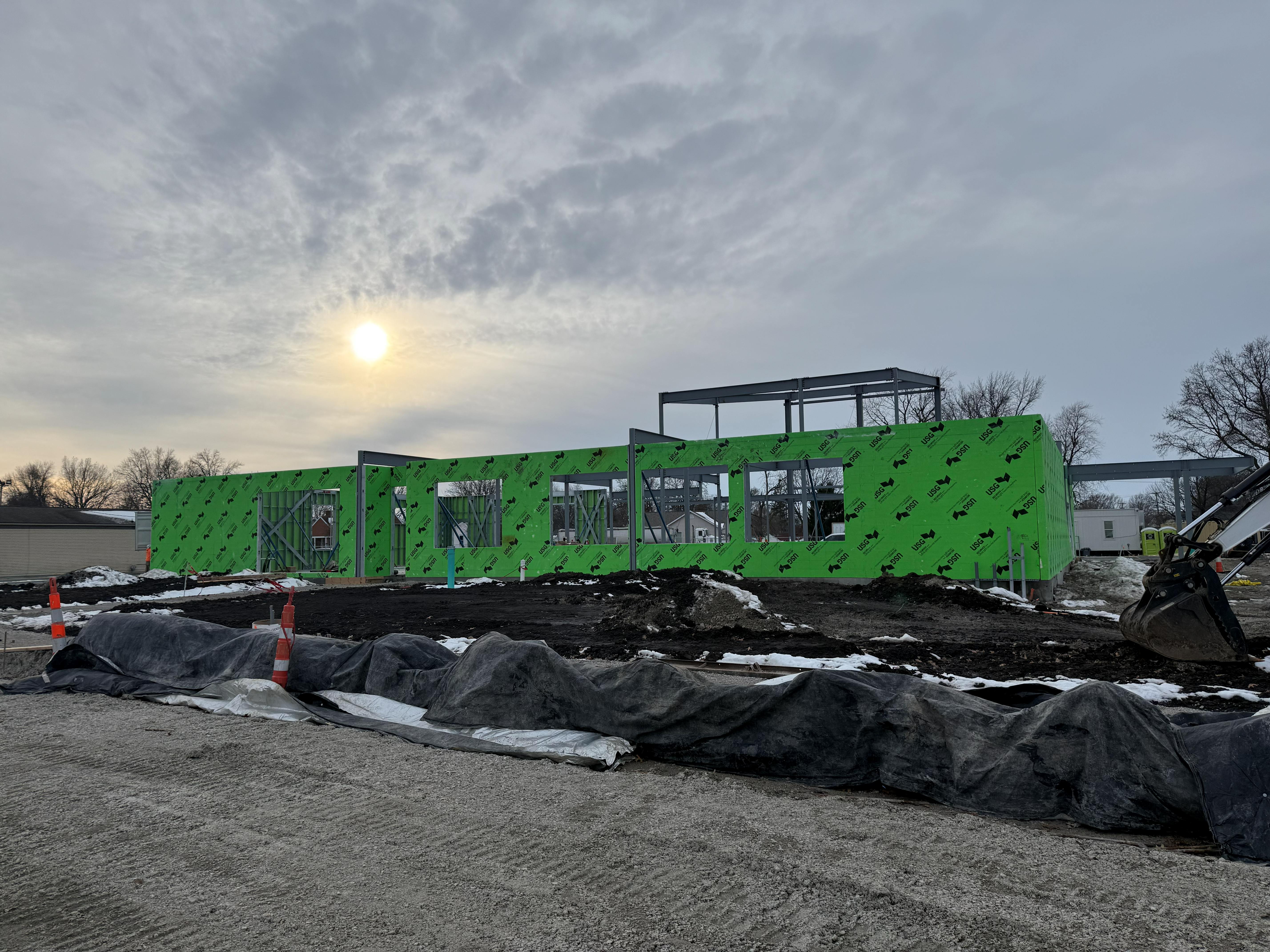
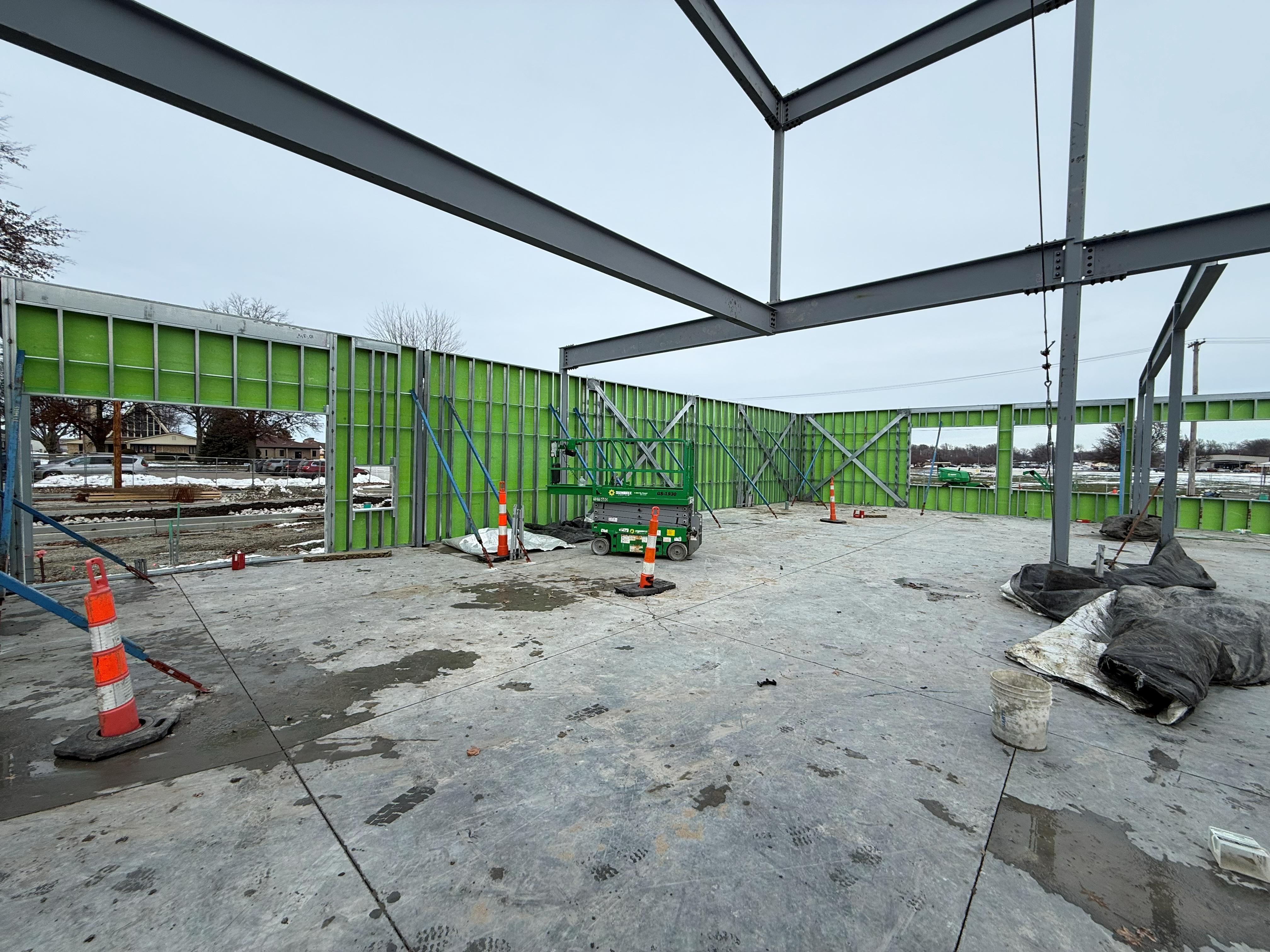
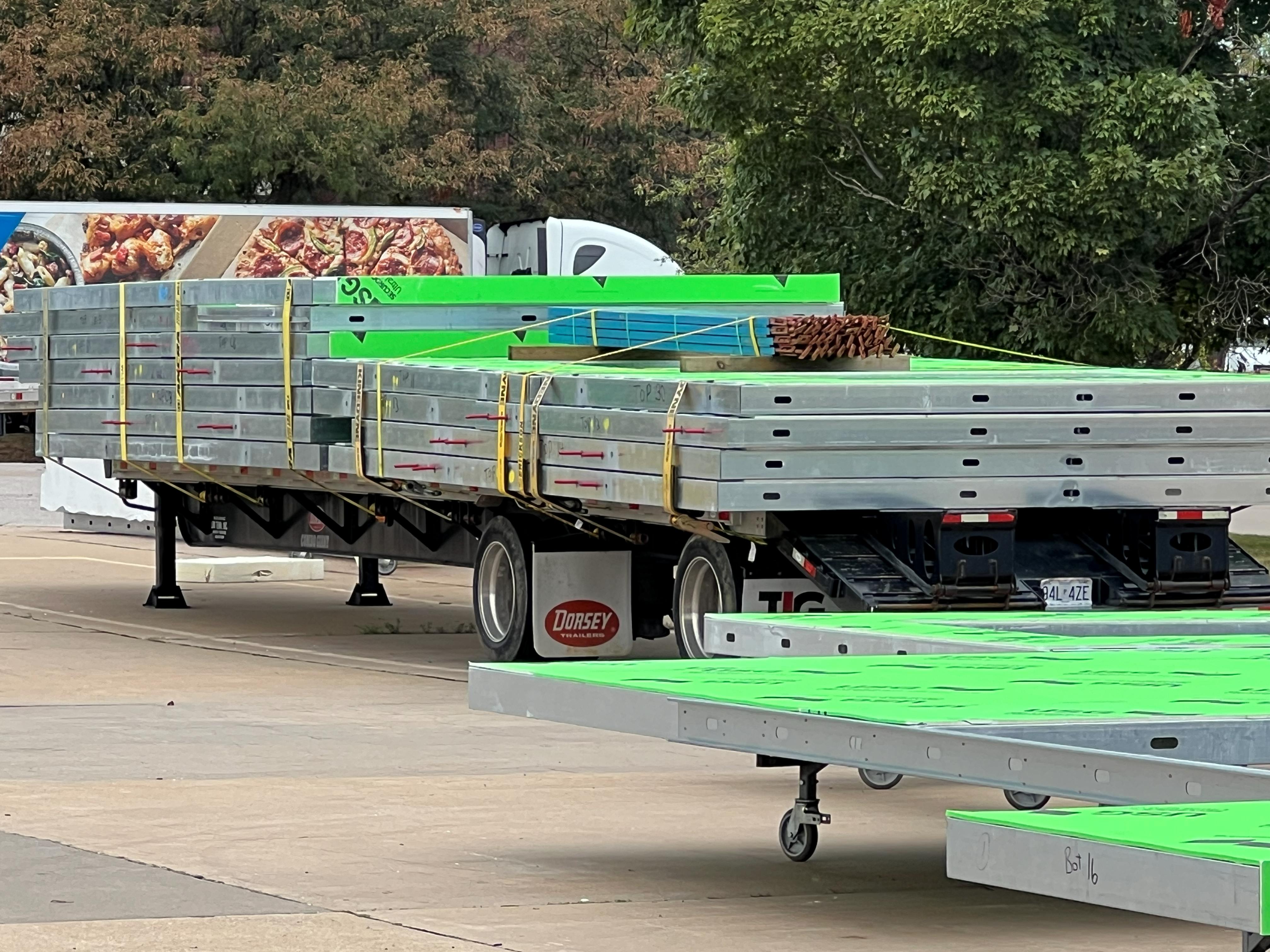

Prefabrication reduced the construction schedule by approximately 3–4 weeks compared to conventional on-site framing methods.
There were no delays or unforeseen challenges during fabrication or installation. The efficiency of off-site manufacturing combined with rapid on-site assembly kept the project on track and ahead of a traditional timeline.
Although prefabrication can require upfront planning and coordination, this project delivered measurable cost benefits:
- Reduced on-site labor costs & saved on per diem expenses
- Minimized material waste
- Limited rework due to controlled fabrication conditions
- Accelerated building turnover
By shortening the construction schedule, the owner realized both direct cost savings and the added financial benefit of occupying the building sooner.
Prefabrication contributed to improved sustainability and quality outcomes:
- Reduced job site waste
- Lower on-site environmental impact
- Improved consistency and quality control through off-site manufacturing
The controlled fabrication environment ensured precision, resulting in a high-quality exterior structural system with minimal field adjustments.
Collaboration was driven through TJ Wies Prefab’s design management process, which aligned the project team from early coordination through final installation. By establishing clear communication channels, defining key milestones, and proactively coordinating design details, the process kept all stakeholders working toward the same objectives. This structured approach ensured challenges were addressed early, decisions were made efficiently, and the transition from design to field installation was seamless, resulting in a smooth and highly coordinated onsite execution.
Based on the success of this project, prefabrication will be a core component of how we approach future work. We will look to position prefab not as an alternative, but as the standard for delivering efficient, high-quality projects for financial facilities moving forward.
The use of prefabrication on the Taylorville Community Credit Union project delivered:
- 3–4 weeks saved on the schedule
- Reduced labor and material waste
- Improved quality control
- Faster building dry-in
- Measurable cost savings for the owner and GC
Both the owner and general contractor recognized the time and financial benefits achieved through this approach.


